¿Qué significa beneficiario final?
The concept of beneficial ownership helps us understand how people own, control and benefit from companies and other legal vehicles, like trusts. Beneficial ownership derives from share ownership, benefiting from assets or business activities, or controlling business activities.
Companies or people can own other companies.
Que los individuos son propietarios de empresas y que a veces las empresas son a su vez propietarias de otras empresas es algo bien sabido.
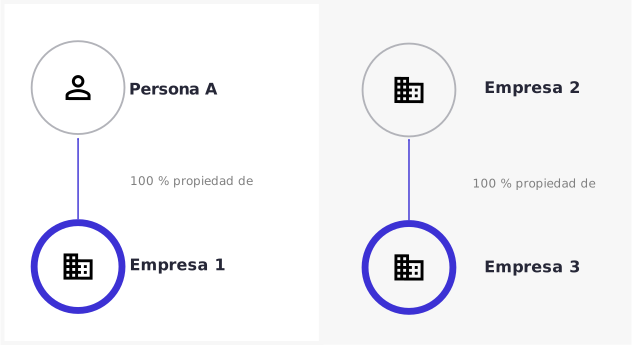
People ultimately benefit.
Aun cuando las empresas son propietarias de otras empresas, son los individuos quienes casi siempre aparecen al final de la cadena de titularidad. Se benefician en última instancia del éxito financiero de las empresas, y suelen participar de sus fracasos.
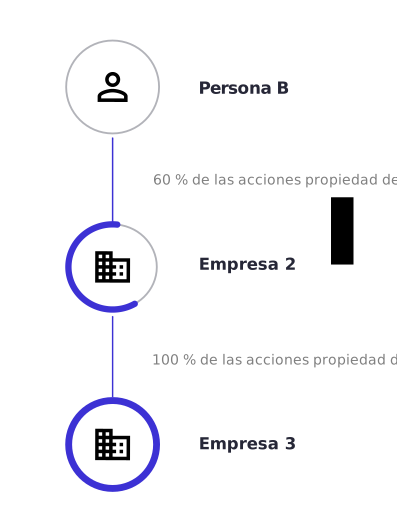
Here, Company 2 is an intermediary in a chain of ownership.
Know who ultimately controls a company.
If a person owns something, they usually have some control over it. Owning shares in a company may confer voting rights, for example. But the rights conferred by ownership are sometimes split up - by share classes, contracts, agreements and other mechanisms. For example, an executive director might have the right to appoint 60% of the other board members, while having little direct financial stake in the business.
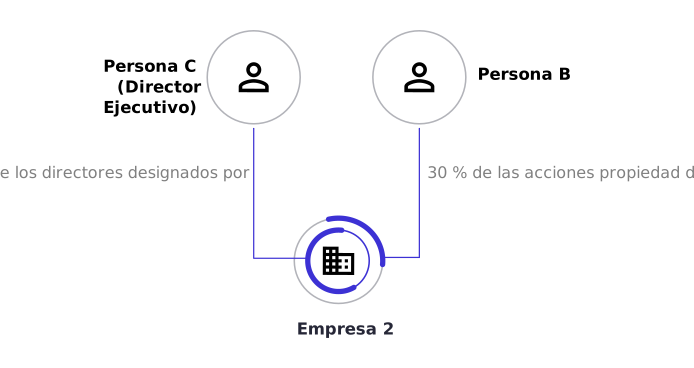
El hecho de tener un control significativo sobre la composición y las decisiones de una empresa puede utilizarse para orientar en un determinado sentido los beneficios y los riesgos directos. Quienes asumen los riesgos financieros de una empresa pueden no ser aquellos que toman las decisiones. En ese caso, necesitamos saber quién ejerce el control.
Understanding who controls and who benefits from different legal vehicles helps governments, citizens and companies know who they are really doing business with.
Laws define beneficial ownership.
Simply, «beneficial owners» are those who significantly control or benefit from a company. They have significant interests in it (directly or indirectly), via ownership, via control or via enjoyment of its assets.
Governments and regulators provide legal definitions. They decide the threshold at which an individual’s various interests confer beneficial ownership. Legal definitions of «beneficial owner» differ from jurisdiction to jurisdiction, and even from sector to sector, but they are all derived from the particular types of interests people can hold in companies.
So whether someone qualifies as a beneficial owner of a company depends on both: the particular interests they hold in it (directly or indirectly), and the applicable definition of «beneficial owner».